Most water damage around a chimney doesn’t announce itself. It works quietly , behind siding, under roof decking, inside wall cavities , and by the time a brown stain blooms on the ceiling, the leak has usually been active for months. In Southampton, where wind-driven rain and salt-heavy coastal air punish every seam on a roofline, the most common culprit isn’t the brick itself. It’s the thin metal barrier almost nobody looks at: the flashing.
At TrueLine Home Improvement Inc, our crews are called to East End homes every season for “mystery leaks” that turn out to be the same story told a dozen different ways , flashing that separated, corroded, or was never installed correctly in the first place. This article explains how those failures happen, why coastal homes are especially vulnerable, what the damage path looks like inside your walls, and when chimney flashing repair becomes urgent rather than optional.
What Flashing Actually Does at the Roofline
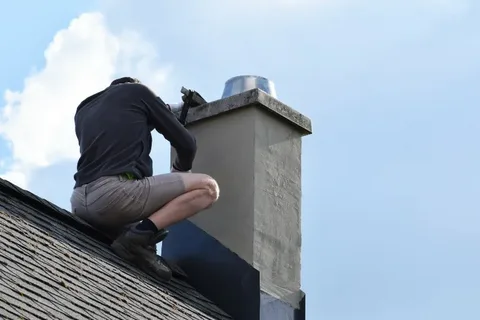
Flashing is the system of overlapping metal pieces , step flashing, counter flashing, and sometimes a soldered pan , that seals the joint where your chimney rises through the roof. That joint is one of the most stressful intersections on the entire house. The roof expands, contracts, and flexes with temperature swings. The masonry chimney barely moves at all. Flashing is the only component engineered to bridge those two materials while staying watertight.
When it’s installed correctly, step flashing weaves into each shingle course, and counter flashing is cut into a mortar joint so water sheds over the layers below, the way shingles overlap each other. When it fails, water slips behind the metal and enters the structure , often several feet away from where the stain eventually appears.
That distance between entry point and visible symptom is exactly why so many chimney leaks get misdiagnosed as roof problems, siding problems, or even plumbing problems.
Why Flashing Fails Faster Near the Southampton Shoreline
Flashing anywhere on Long Island has a hard life. Flashing within a few miles of the ocean has a shorter one. Three local factors accelerate failure:
Salt-laden air corrodes metal from the surface inward
Aluminum and galvanized steel flashing , common on homes built or re-roofed on a budget , pit and corrode noticeably faster in coastal zones. Pinholes form long before the metal visibly fails, and a pinhole is all wind-driven rain needs.
Nor’easters push water uphill
Ordinary rain falls down. Nor’easter rain travels sideways, and sometimes upward, driven under laps and joints that would shed vertical rainfall without any trouble. A flashing detail that performs fine in a light shower can leak badly during a three-day coastal storm.
Freeze-thaw cycling works sealants loose
Many older repairs around Southampton relied on roofing cement or caulk smeared over the flashing joint. Sealant is a patch, not a system. Winter freeze-thaw cycles crack it within a season or two, and homeowners often don’t realize the “repair” they paid for expired years ago.
Add chimney movement from settling foundations , common in older homes near the water table , and the flashing joint becomes the single most likely leak point on the whole roof.
The Hidden Damage Path: From Roofline to Living Room
Understanding where the water goes explains why flashing leaks are so expensive when ignored.
- Entry: Water slips behind separated counter flashing or through corroded step flashing during a storm.
- Saturation: It soaks the roof sheathing around the chimney first. Plywood decking delaminates slowly and silently.
- Migration: Water follows rafters and framing downhill, sometimes traveling six to ten feet before dripping.
- Interior symptoms: Ceiling stains near , but rarely directly beside , the chimney. Peeling paint. A musty smell in an upstairs closet.
- Secondary damage: Wet insulation loses R-value, mold colonizes wall cavities, and in fireplace chases, moisture rusts the damper and degrades the firebox.
By the stage where drywall shows staining, the repair bill usually includes carpentry and interior finishing on top of the flashing work itself. A fix that might have cost several hundred dollars at the roofline can become a multi-thousand-dollar interior restoration.
Warning Signs Southampton Homeowners Tend to Miss
The early indicators are subtle, which is why an annual fireplace chimney inspection in Southampton, NY catches problems that homeowners can’t see from the ground. Watch for:
- Rust streaks on the chimney face , often the first visible clue that metal above is corroding.
- Dark shadows on shingles beside the chimney that linger after the rest of the roof dries.
- A damp or metallic smell from the fireplace after heavy rain, even with no visible water.
- Efflorescence (white mineral bloom) on interior chimney brick , evidence that water is moving through the masonry.
- Ceiling stains that appear only after wind-driven storms, not ordinary rain. That pattern points strongly to flashing rather than shingles.
- Lifted or wavy counter flashing visible from the ground with binoculars.
If two or more of these show up together, water is already inside the assembly.
Why East End Homeowners Deal With Flashing Problems Sooner Rather Than Later
There’s a practical financial logic that experienced coastal homeowners follow. Flashing failure is progressive, and every storm season compounds it. Deferring the work through one more winter doesn’t hold the cost steady , it converts a straightforward metal repair into structural drying, sheathing replacement, and interior painting.
There’s also an insurance dimension. Carriers routinely distinguish between sudden damage and long-term neglect. A leak that has clearly been active for months, documented by layered staining and rot, is far harder to claim than storm damage addressed promptly. Scheduling a professional chimney inspection service after any major nor’easter creates a paper trail that protects you either way.
Finally, flashing rarely fails alone. The same inspection frequently uncovers a cracked crown, deteriorated mortar joints, or a missing cap , small items that are inexpensive to bundle into one visit and expensive to address separately later.
How a Proper Flashing Repair Unfolds
A legitimate repair replaces the system, not the sealant. Here’s what the workflow looks like on a typical Southampton home:
1. Diagnostic inspection
The roofline, chimney exterior, attic framing, and interior finishes are examined together. Moisture readings around the chase confirm whether water is active or historical.
2. Removal of failed materials
Old flashing, roofing cement, and any compromised shingles around the chimney come out. If sheathing is soft, it’s cut back to sound wood.
3. New step flashing, woven correctly
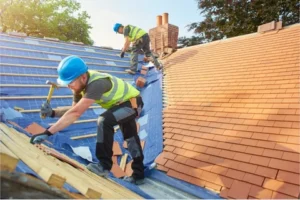
Individual step flashing pieces are interlaced with each shingle course , never one continuous strip, which is a shortcut that guarantees future leaks.
4. Counter flashing cut into the masonry
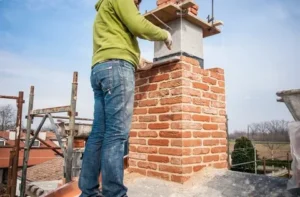
The upper flashing is set into a ground-out mortar joint (a reglet), mechanically locked, and sealed , not surface-glued to the brick face.
5. Material selection for the coast
Near the shoreline, copper or heavy-gauge stainless flashing earns its premium. It outlasts aluminum by decades in salt air and typically survives multiple roof replacements.
6. Water testing and documentation
A controlled hose test confirms the assembly sheds water before the crew leaves, and photos document the completed detail for your records.
What the Work Costs , and What Waiting Costs More
Pricing varies with chimney size, roof pitch, and material choice, but Southampton homeowners can think in these general tiers:
- Minor reseal or partial flashing correction: the low hundreds , appropriate only when the underlying system is sound.
- Full flashing replacement in aluminum or galvanized steel: mid-hundreds to around a thousand dollars on most homes.
- Copper or stainless system on a coastal home: a higher upfront investment, offset by a service life measured in decades.
- Deferred failure with interior damage: several thousand dollars once sheathing, insulation, drywall, and painting enter the scope.
The pattern is consistent: the flashing itself is never the expensive part. The water is.
Field-Tested Recommendations for Coastal Chimneys
- Inspect the roofline every spring and after any named storm , binoculars from the yard are enough to spot lifted metal.
- Never accept roofing cement as a permanent flashing “repair.” It buys months, not years.
- If your home sits within a couple of miles of the water, specify copper or stainless when the flashing is replaced.
- Pair flashing work with chimney waterproofing services in East Hampton, NY and surrounding East End areas if your masonry shows efflorescence , sealing the brick and fixing the metal together closes both water paths at once.
- Keep dated photos of your chimney and roofline. They’re invaluable for insurance claims after storm damage.
Frequently Asked Questions
How can I tell whether a leak is coming from the flashing or the chimney brick itself?
Timing is the best clue. Flashing leaks typically appear during or immediately after wind-driven rain and show up as ceiling or wall stains near the chimney chase. Masonry absorption leaks tend to appear slowly after prolonged soaking rain and often show as efflorescence or damp brick inside the firebox. A moisture-mapped inspection can distinguish the two definitively.
Does new roof installation automatically include new chimney flashing?
Not always , and this is one of the most common gaps in re-roofing projects. Some roofers reuse existing counter flashing to save labor. If your roof was replaced but the flashing wasn’t, the oldest component on your new roof is the one guarding its most vulnerable joint. Ask for documentation of what was replaced.
Is copper flashing really worth the extra cost in Southampton?
For homes near the shoreline, yes. Aluminum flashing in salt air can begin pitting within a decade, while copper routinely lasts fifty years or more and often outlives two full roof cycles. On a long-term ownership timeline, copper is usually the cheaper material per year of service.
Can I just caulk the gap where the flashing meets the brick?
You can, and it will likely hold through a season or two of ordinary weather. But caulk over a failed flashing joint treats the symptom, not the geometry. Once freeze-thaw cycles open the sealant, water re-enters , often less visibly than before, because the caulk now traps moisture inside the assembly.
How often should a coastal chimney be professionally inspected?
Annually is the standard recommendation, ideally in fall before heating season. After any major nor’easter or hurricane-remnant storm, a follow-up check of the flashing and cap is smart regardless of when the last inspection occurred.
Will homeowners insurance cover flashing-related water damage?
Policies generally cover sudden storm damage but exclude long-term seepage and deferred maintenance. That’s why prompt documentation matters: a leak identified and reported quickly after a storm is treated very differently than one that shows months of staining history.
Thoughts
A chimney leak is almost never a chimney problem alone , it’s a roofline system problem, and flashing sits at the center of that system. For Southampton homes facing salt air and sideways rain, the metal at that joint deserves more attention than it usually gets. If your ceiling has started telling you a story after storms, or your chimney hasn’t been looked at since the roof went on, have the flashing evaluated before the next nor’easter does the evaluating for you. A one-hour inspection now is the least expensive step in this entire article.